NVIDIA Announces European AV and Robotaxi Programs Built on Hyperion
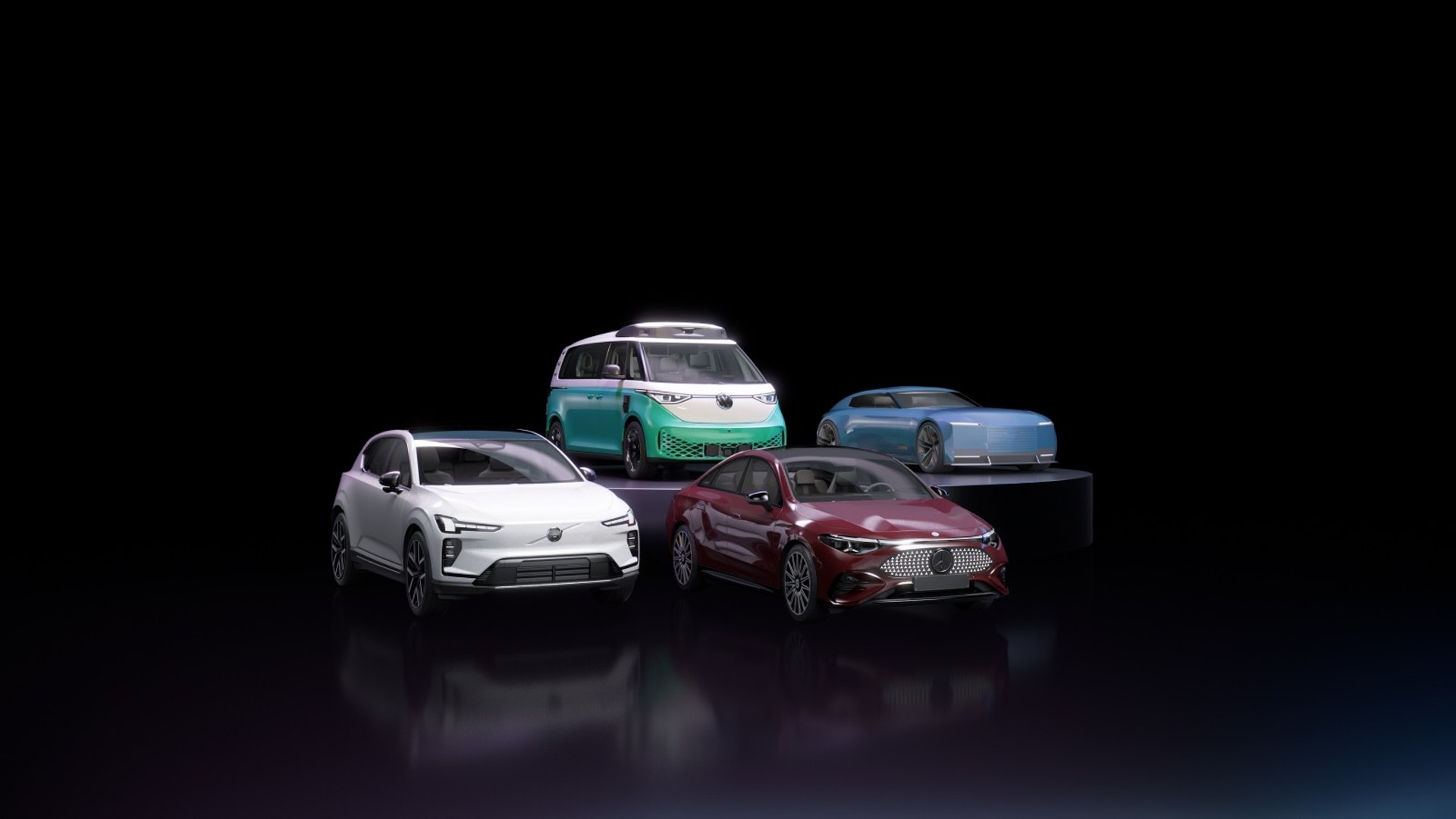
NVIDIA announced at GTC Berlin on October 21, 2026, that European automakers and mobility providers including Bolt with Lucid, Mercedes-Benz, Volkswagen Commercial Vehicles and Ein…
NVIDIA announced at GTC Berlin on October 21, 2026, that European automakers and mobility providers including Bolt with Lucid, Mercedes-Benz, Volkswagen Commercial Vehicles and Einride are showcasing autonomous-mobility use cases on the NVIDIA Hyperion computing platform, demonstrating potential applications for level 3 and level 4 vehicles and future robotaxi fleets.
Volvo Cars is adopting Hyperion and NVIDIA Alpamayo Stack software for safe automated driving, and NVIDIA introduced new AI and safety technologies to help developers build, validate and deploy autonomous vehicles at scale.
NVIDIA described autonomous transportation as a multitrillion-dollar opportunity, with robotaxis leading the move to commercial level 4 deployment.“Robotaxis are the first mass-market application of robotics and physical AI, reinventing how people and goods move,” NVIDIA founder and CEO Jensen Huang said in the company’s GTC Berlin announcement.
Huang said Hyperion, together with the Halos safety operating system, gives partners a full-stack robotaxi platform designed to achieve full autonomy and the highest levels of safety.
Bolt has selected NVIDIA Alpamayo Stack, NVIDIA’s full-stack autonomous-driving software, to drive vehicles in its European autonomous ride-hailing program, beginning with Lucid.Bolt said the program will start in Madrid during 2027, initially gathering real-world driving data to support development and validation of the autonomous-driving technology, subject to regulatory approval, and identified Germany and France as key markets for future deployment.
The program will lay the foundations for a rollout of at least 25,000 Level 4-ready Lucid vehicles equipped with NVIDIA Hyperion, and it forms a major part of Bolt’s wider plan to deploy 100,000 autonomous vehicles across Europe and the wider UNECE region by 2035, the company said.
Bolt and NVIDIA will work together to adapt the driving software for European roads and integrate it into vehicles from multiple manufacturers, beginning with Lucid.Running on Hyperion, Alpamayo Stack combines reasoning AI with classical perception and planning, supported by NVIDIA Halos safety capabilities, according to Bolt.
“We want to make autonomous ride-hailing available at scale across Europe, with 100,000 vehicles on our platform by 2035,” Jevgeni Kabanov, Bolt’s president and head of autonomous driving, said in Bolt’s announcement.
Kabanov said the Region of Madrid is pioneering a structured framework for commercial autonomous mobility in coordination with national authorities, and that Germany will also be a priority, with cities there already setting out ambitions for autonomous mobility.
The NVIDIA and Lucid program follows Bolt’s first autonomous mobility launch in Luxembourg and sits alongside Bolt’s work with Pony.ai and Stellantis.
Bolt Autonomous Driving Solutions will lead development and commercialization of the autonomous ride-hailing service in Europe, contributing fleet-management infrastructure, regulatory expertise and local market knowledge from a mobility platform serving more than 200 million customers.
NVIDIA automotive vice president Rishi Dhall said Hyperion standardizes the compute and sensor architecture across vehicle platforms while Alpamayo Stack and Halos provide the driving intelligence and safety foundation, adding that robotaxis will scale when every vehicle is built on a common, safety-engineered foundation.
Kay Stepper, president of Lucid Technologies and chief digital officer at Lucid, said the collaboration to date and the planned start of data collection in 2027 mark the first steps toward scalable, software-defined autonomous mobility in Europe.
At GTC Berlin, Volkswagen Commercial Vehicles is presenting its autonomous ID. Buzz AD vehicle platform with Hyperion to support multiple autonomous-driving systems. NVIDIA said Hyperion provides a common computing and sensor architecture designed to simplify integration and validation, helping developers and mobility operators bring robotaxi and commercial transport services to market.
Volvo Cars is combining its vehicle safety systems and engineering expertise with Hyperion, Halos OS and Alpamayo Stack to enable future Volvo cars to safely navigate complex real-world environments from door to door, NVIDIA said.
Mercedes-Benz is extending its partnership with NVIDIA on Hyperion and Alpamayo Stack to support development of the automaker’s L3 and L4 capabilities, and announced that MB.DRIVE ASSIST PRO, developed with NVIDIA, will soon receive approval for urban point-to-point driver assistance in Germany.
Beyond passenger vehicles and robotaxis, Einride is building its next-generation Einride Driver on Hyperion for autonomous freight trucks, using Halos, Alpamayo and NVIDIA Cosmos open world models to develop and validate its driving system. TIER IV and the Technical University of Munich plan to integrate Hyperion to develop and validate systems for autonomous public transportation in Ger